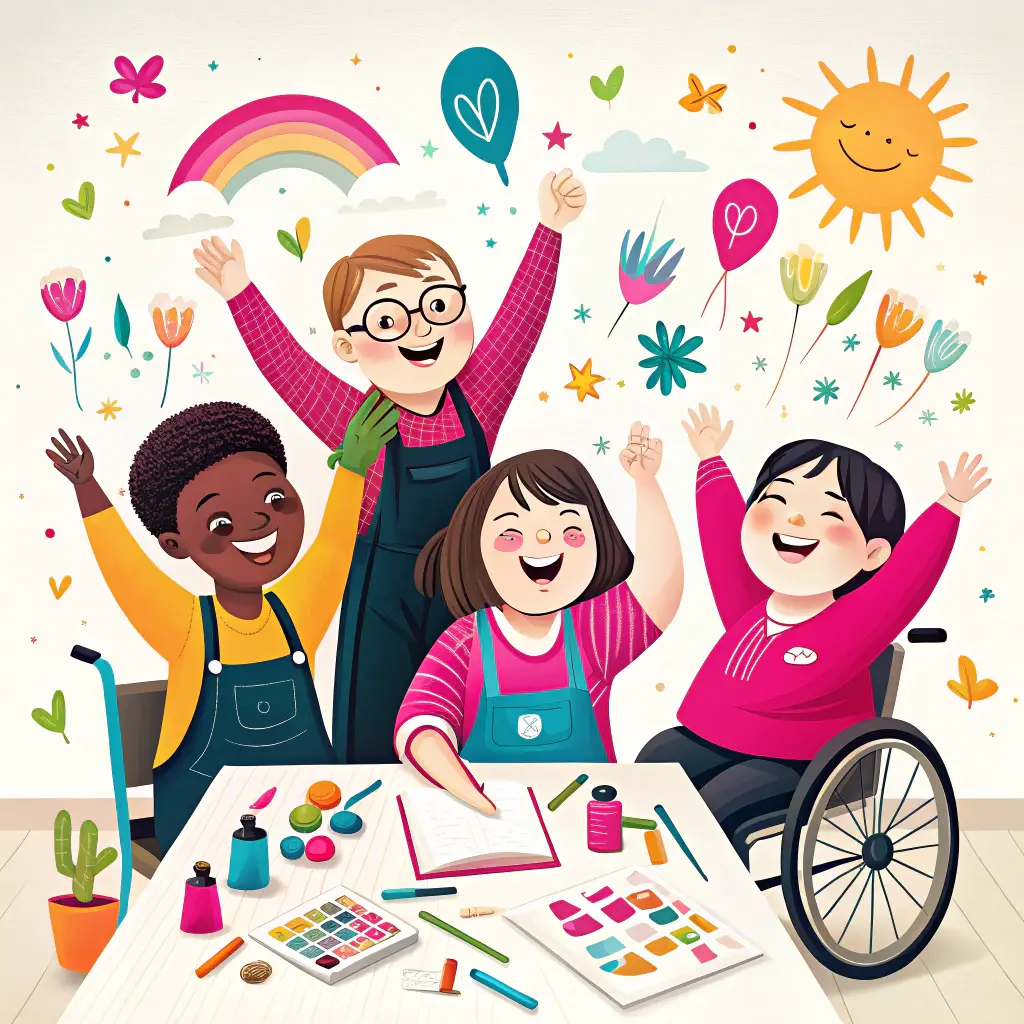
Four diverse children, including one in a wheelchair, smile and raise their arms joyfully around a craft table with art supplies. The colourful background features a rainbow, sun, flowers, and hearts.

What if the arts were a platform for everyone?

Every artist dreams of an audience, but what if the arts were a place where every person, regardless of intellectual or physical ability, had the opportunity to create, participate in and experience? This isn’t about simply adding a ramp; it’s about fundamentally enriching our culture by ensuring that all voices and abilities are celebrated.

What if an inclusive art form was the most powerful?

Inclusion in the arts isn’t a special program—it’s about ensuring that everyone, including those with intellectual or physical disabilities, can contribute their unique perspectives. When we remove barriers, we open up a world of creativity and deepen the connection between art and the community it serves.
The reality is, a more inclusive arts community leads to more innovative and meaningful work. It attracts diverse audiences, fosters genuine connection and ensures that the arts truly reflect the world around us. It’s about tapping into an often-overlooked talent pool and making sure that artistic excellence is defined by more than just conventional boundaries.

Simple, Tangible Ways to Be More Inclusive

It can feel overwhelming, but building a more inclusive arts culture starts with small, deliberate actions. What if you chose just one or two of these to implement this season?

1. What if you rethought accessibility?

  • Go beyond ramps. While physical accessibility is crucial, consider how people with intellectual disabilities can navigate your space. Are there clear visual cues? Is a quiet area available for those with sensory needs?
  • Provide assistive technologies. What if you offered audio descriptions for performances, or screen-reader-friendly versions of your digital programs? This ensures everyone can access your content.
  • Use plain language. Write descriptions and artist bios in a way that is easy for everyone to understand. Avoid complex jargon and explain concepts simply.
2. What if you changed the way you participate?

  • Run inclusive workshops. Create workshops or classes specifically designed for people with different abilities. This could be a pottery class for those with limited mobility, or a music workshop that focuses on sensory exploration.
  • Support emerging artists with disabilities. What if you offered a grant, residency, or mentorship program to artists with disabilities? This provides a clear pathway for them to build their careers.
  • Partner with advocacy groups. Work with organizations that specialize in disability support services or recreation programs. They can connect you with a talented pool of artists and participants and offer valuable insights.

3. What if you celebrated their contributions?

  • Showcase diverse stories. What if your next exhibition or performance featured the work and stories of people with intellectual or physical disabilities? This is a powerful way to promote empathy and understanding.
  • Use inclusive imagery. Make sure your marketing materials, including your social media and website, reflect a diverse range of people participating in and enjoying the arts. Let people see themselves represented.
Inclusion in the arts isn’t an add-on; it’s central to artistic excellence. It’s a continuous journey that grows with every small action. What will you do today to help build a more inclusive artistic community?

What if…

you could be the difference?

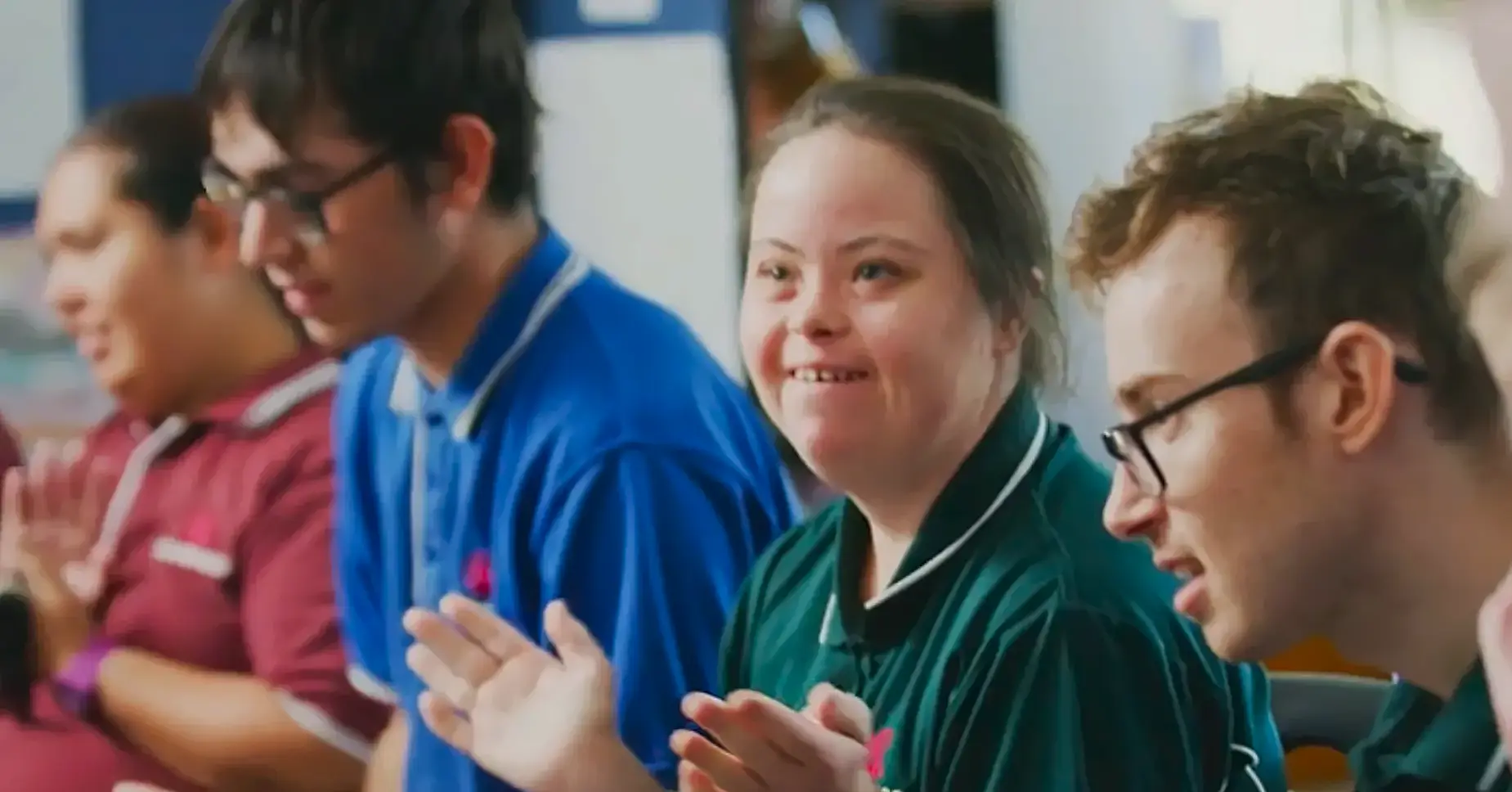
A group of young people with disabilities, wearing coloured polo shirts, sit together and clap, smiling and enjoying themselves in a bright indoor setting—promoting inclusion in your community.